
Standing on Penalty Corners: India Top Asia After a 5-2 Win Over China — The Numbers Behind the Scoreline
মূল তথ্য: এশিয়ান চ্যাম্পিয়নস ট্রফির গ্রুপ পর্বে ভারত চীনকে ৫-২ গোলে হারিয়েছে; পাঁচ গোলের তিনটি পেনাল্টি কর্নার থেকে, দুটি ওপেন প্লে থেকে; স্কোরার সুখজিৎ সিং (দুটি), জুগরাজ সিং ও হারমানপ্রীত সিং। কেন গুরুত্বপূর্ণ: ৬০ শতাংশ গোল পেনাল্টি কর্নার থেকে আসা আধুনিক হকির স্বাভাবিক ৩০-৫০ শতাংশের বেশি, যা সেট-পিস নির্ভরতা নির্দেশ করে এবং শীর্ষমানের কর্নার ডিফেন্সের বিরুদ্ধে ঝুঁকি তৈরি করে। কী কমতি: প্রতিবেদনে পজেশন, শট, সার্কেল এন্ট্রি ও অর্জিত পেনাল্টি কর্নারের কোনো তথ্য নেই, ফলে ওপেন প্লের সক্ষমতা ও প্রতিরক্ষার প্রকৃত মান অপরীক্ষিত। কোন দিক ইতিবাচক: সমতা ফেরার এক মিনিট পর হারমানপ্রীতের গোল পুনরাবৃত্তিযোগ্য মানসিক স্থিরতা ও প্রশিক্ষিত সেট-পিস রুটিন দেখায়; সুখজিৎ ও জুগরাজের গোল স্কোরিংয়ের ভার ছড়িয়ে থাকার সংকেত। কোন দিক উদ্বেগজনক: মধ্যম র্যাঙ্কের প্রতিপক্ষের বিরুদ্ধে হাফ-টাইমের চার মিনিট আগে সমতা খাওয়া এবং মোট দুই গোল হজম, যা রেস্ট-ডিফেন্স ও কর্নার রক্ষার প্রশ্ন তুলে। প্রেক্ষাপট: এই টুর্নামেন্ট অলিম্পিকের সরাসরি বাছাইপথ নয়—এশিয়ার সরাসরি কোটা আসে এশিয়ান Games চ্যাম্পিয়ন থেকে; এখানকার মূল্য র্যাঙ্কিং পয়েন্ট, সিডিং প্রভাব ও প্রস্তুতি। যাচাই সাপেক্ষ: ভারতকে স্বাগতিক, ভেন্যু অলিম্পিয়ান সুরজিৎ সিং হকি Stadium এবং Coach ক্রেইগ ফুলটন—এই সংমিশ্রণটি অস্বাভাবিক, স্বাধীন নিশ্চিতকরণ প্রয়োজন। Next পরীক্ষা: শীর্ষ দশের প্রতিপক্ষের বিরুদ্ধে নিরপেক্ষ ভেন্যুতে ওপেন প্লে থেকে গোল করার এবং নিজের পেনাল্টি কর্নার বাঁচানোর সক্ষমতা।
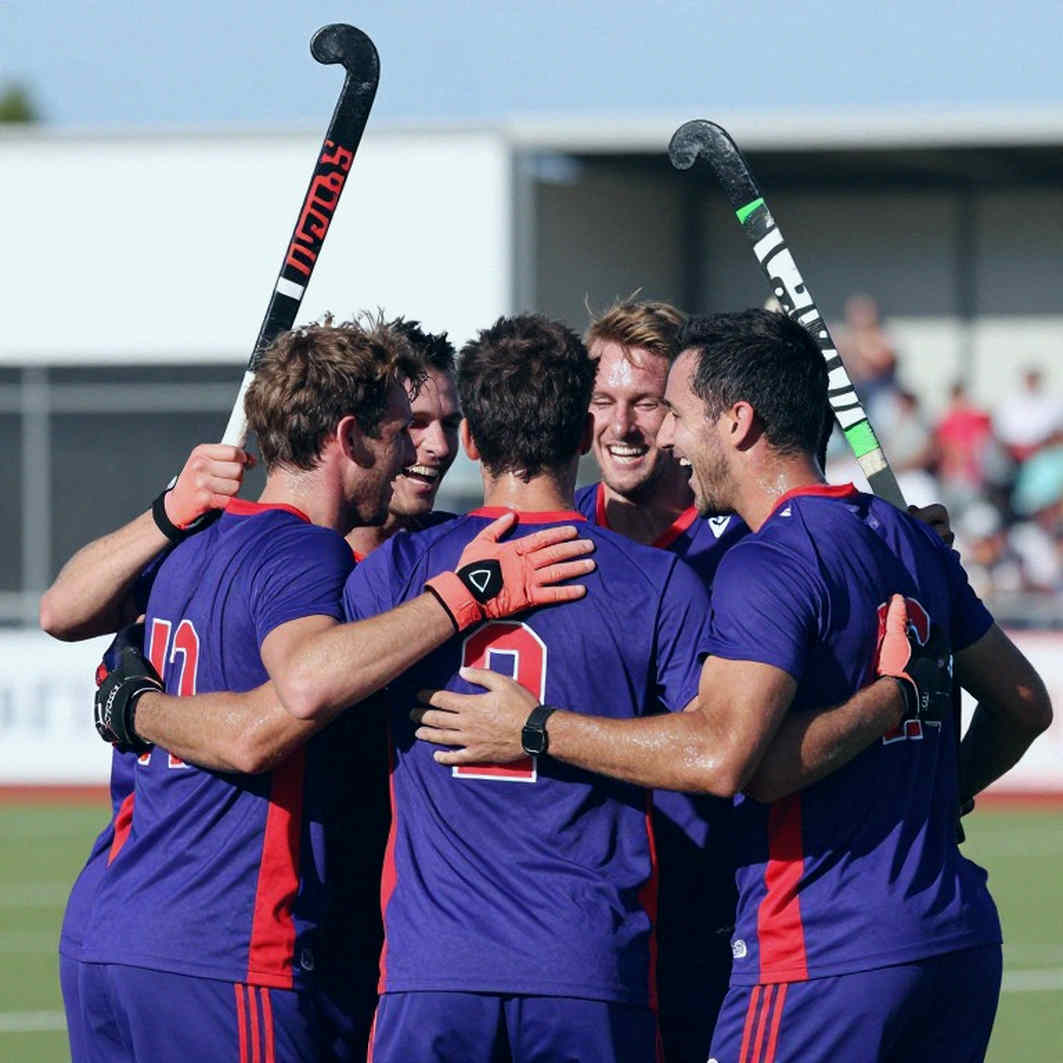
India's men's team beat China 5-2 in the group phase of the Asian Champions Trophy. Three of the five goals came from penalty corners, the other two from open play. The report names Sukhjeet Singh (a brace), Jugraj Singh and captain Harmanpreet Singh among the scorers. The second half was relatively tension-free, and the win took India to the top of the six-team table.
What matters more is what the report does not contain. There is no possession figure, no shot count, no circle-entry number, and crucially no figure for penalty corners won. The scoreline is legible; the process is not.
The 60 per cent problem
In modern field hockey, penalty corners typically supply 30 to 50 per cent of goals. Three of five is 60 per cent — above the normal band. That is not automatically a fault. It shows a well-drilled set-piece unit and a specialist drag-flick worth relying on. But it is also the signature of dependency: when three of five goals come from a single method, the opponent's defensive problem narrows to one specific channel. Against a low block or an elite penalty-corner-killing unit, the same ratio becomes the most likely source of a scoreline collapse.
The analytical blind spot is conversion efficiency. Knowing India scored three corner goals without knowing how many corners they won makes it impossible to distinguish elite efficiency from high-volume, average-efficiency supply.
The second-quarter equaliser
The narrative claims India were strong in all four quarters. The same narrative reports that China equalised four minutes before half-time — precisely the window defined by rotation and fatigue. A genuine four-quarter performance does not include a pre-half-time equaliser from a lower-ranked opponent. That goal more likely reflects a structural rest-defence or penalty-corner-defence lapse than an individual error, but the data to settle the question is absent.
The strongest positive signal
Harmanpreet restored the lead one minute after the equaliser. That response is the most transferable quality on display — repeatable, opponent-independent, and evidence of captain-led composure and a drilled restart routine. A between-quarter reload of the set-piece pattern is a recognisable coaching behaviour in the four-quarter format.
Open play: functional, not dominant
Sukhjeet's brace and Jugraj's goal show the scoring load is not concentrated in one player — forwards, defence and the corner specialist all contributed. But without circle entries and shots, clinical transition cannot be separated from efficient conversion of a small number of chances. Only the first travels well over a long tournament.
Defence is the real question
A 13-0 against Bangladesh was not a defensive test. Two goals conceded against China is the more informative number. There is no information on corners conceded, on the first-runner's aggression, or on goalkeeping positioning. India's defensive record against elite sides is therefore unproven, not weak.
China is the under-priced riser
Scoring twice against Asia's benchmark, in conditions close to the benchmark's own, is a concrete sign that state investment and foreign coaching are translating into output. China moving into Asian Games semi-final territory within the Los Angeles 2028 cycle would change India's qualifying calculus.
What this tournament is not
The Asian Champions Trophy is not the direct Asian Olympic route. The direct berth comes through the Asian Games champion. This is a continental title, a ranking-points event and a preparation window. It confirms India remain Asia's benchmark; it does not advance their Olympic qualification.

Host designation and form inflation
The report describes India as host at the Olympian Surjit Singh Hockey Stadium with Craig Fulton as coach. That combination is unusual and requires verification. If genuine, home advantage is real but double-edged — familiar turf and acclimatisation on one side, heat and humidity load raising cramp risk in the fourth quarter on the other.
Two wins with 18 goals scored and two conceded looks like dominance, but the sample is two matches against weak and mid-tier opposition. The number worth carrying forward is two conceded, not eighteen scored.
System and structure under Fulton
India have shifted from an all-out counter-attacking identity toward structured build-up and defensive solidity, a European-influenced systematisation. The centralised national camp model builds cohesion that club-based European systems do not, but it can also mask depth weakness — drilled units outperform the sum of their parts, yet a run of three knockout matches against top-ten sides exposes individual quality gaps.
The structural soft spot
India's forward pool is deep; elitedrag-flicker depth is thin. Reliance on Harmanpreet is the clearest structural vulnerability: captain, corner decision-maker and single-point specialist in one player, carrying chronic lower-back and knee load with no readily substitutable alternative. It is the difference between a factor and a dependency.
Global positioning
India are Asia's strongest side and a global medal challenger, but the gap to the Netherlands, Belgium and Germany is systemic rather than talent-based. Resource advantage is not the same as professionalisation advantage: funding stability and camp cohesion outperform most federations, while player-level professionalisation remains low.
Rotation and the four-quarter format
A six-team round-robin means near-daily matches. The tension-free second half is partly a load-management artefact, not purely a superiority signal. Four fifteen-minute quarters create rest windows and reward squad depth. Heavy rotation across the Bangladesh and China fixtures suggests the first-choice XI baseline is still unrevealed, and that this tournament is being used as an evaluation window.
What comes next
All of this is match-window-specific and drawn from a single unverified secondary source. The genuine test is a top-ten opponent, at a neutral venue, under knockout pressure — where open-play creation and corner defence are examined simultaneously. China may well meet India again in a knockout, with nothing to lose and entirely different incentives.
This win confirms the continental hierarchy. The indicators for global ambition will be goals scored from open play and corners defended. Neither question has been answered yet.