
Christchurch, Match 2: Kishan's Groin, Sooryavanshi's 16.5 Balls and India's Risk Arithmetic
Sitanshu Kotak stood up at the pre-match press conference and said something...
Sitanshu Kotak stood up at the pre-match press conference and said something that was not really about the second T20I at all. “There was a lot of speculation I have also seen, just because Ishan had a strain in his groin, the batting order was changed.” That is not an injury update. That is a coach killing a story before it sets.
India's batting coach had one job: report team news. He chose a sentence that talks about the first T20I instead — the match in which Ishan Kishan batted at No.5 rather than his usual No.3, and Tilak Varma walked in at first drop and made 6 off 11.
The scoreboard from Match 1 is clean: 226 chased, four wickets down, two balls remaining. India lead the series 1-0. That is a winning number, and in T20 terms it is also a coin-flip outcome. Replay that chase ten times and a five-five split is the reasonable expectation. Chasing 226 at Hagley Oval with two balls to spare is a genuine accomplishment; it is not evidence of dominance. Reading it as “India have the series under control” is emotion wearing a data costume.
My interest sits elsewhere. The biggest decision in Christchurch is not whether Kishan plays. It is how much recovery risk India is willing to carry on a first-choice top-order batter in a five-match bilateral with no knockout stake. Kotak's phrase — “unlikely he will play tomorrow's match as well” — is not cricket language. It is risk-management language. And when the return-to-play call is deferred to the medical team rather than to the coach or captain, that deference is itself the message: nobody is rushing this.
Hagley Oval, Christchurch. One of those New Zealand grounds where the new ball talks, the wind ignores your feelings, and the outfield dimensions punish batters. For a subcontinental side, away T20Is in New Zealand are the format's hardest adaptation test — lateral seam movement, wind, bigger boundaries. Conceding 226 there implies either an unusually flat surface or significant death-over leakage. Which one it was, I do not know. Saying so is the honest answer. The source material gives no powerplay score, no middle-over run rate, no death-over economy, no toss result, no dew assessment, no day-night confirmation.
Toss and dew are the two most consequential missing variables for Match 2. A day-night fixture in Christchurch materially changes the value of spin and the calculus of chasing. Anyone declaring “India's spin attack will work here” or “win the toss and bowl” without those two data points is guessing, not analysing.
What is actually established: India are touring New Zealand, this is Match 2 of a five-match series on Saturday. Kishan has a groin niggle, is unlikely to play, and the medical team will decide his return. Kishan batted No.5 in Match 1 instead of his usual No.3 and made 1 off 3, dismissed by Mitchell Santner. Sanju Samson is an established opener in this XI. Vaibhav Sooryavanshi may come in.
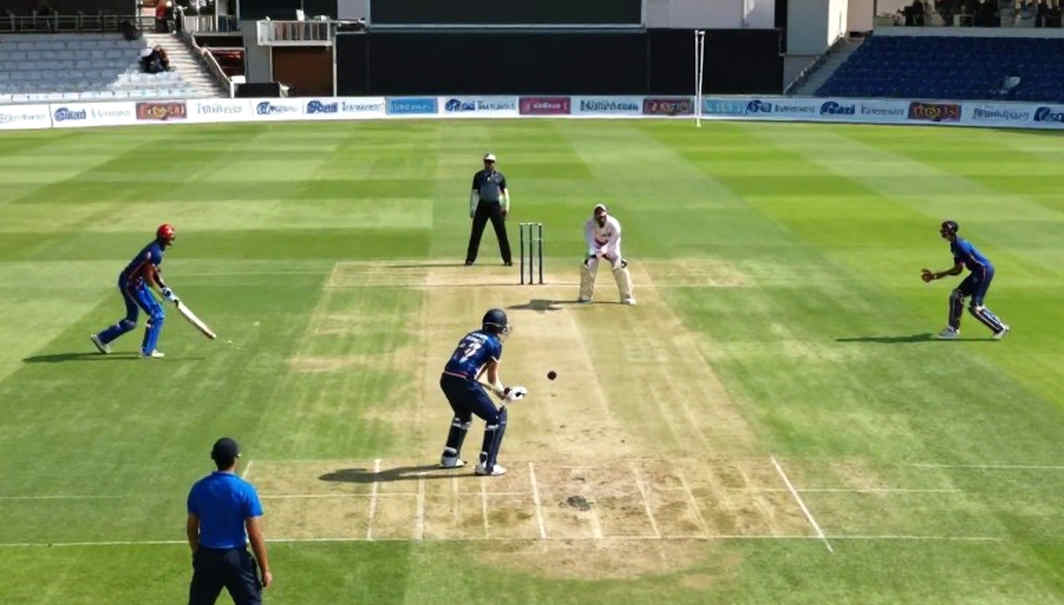
I watch this from Bangalore, at odd hours, in the light of a screen. Born in Sri Lanka, working in India, I keep noticing one thing about how we discuss these series: we are so busy with the result that we stop watching the process. What is happening in Christchurch is a process story. And a process story is a numbers story, not just a scorecard story.
16.5 balls: the number nobody is quoting
Sooryavanshi's T20I record reads 246 runs in 8 matches at a strike rate of 186.36, with two half-centuries. That is a dazzling number, and it is the one everyone is quoting. The more interesting number is the one derived from it.
246 runs at 186.36 per hundred balls implies roughly 132 balls faced. Across eight innings, that is about 16.5 balls per innings.
That tells you a profile. Elite T20I top-three batters typically face 25 to 30 balls an innings. At 16.5, either the batter is getting out very quickly, or he is being used in a role that is not about building an innings but about breaking one. I call that a cameo profile, not an anchor profile. When Sooryavanshi connects, he scores at a rate that wins matches. What he has not yet evidenced internationally is the other half of a top-three job — surviving the new ball, holding the rate through the middle, batting thirty balls to make sixty. Eight innings at 16.5 balls does not prove he cannot; it proves he has not been asked to.
A second derivation matters too. Two half-centuries inside 246 runs across eight innings means a large share of the output sits in two performances. That is concentration risk, not a consistency signal. A 246-run total spread across eight innings would be far more predictive than the same total banked in two. Selecting him at No.3 means accepting that the likely outcomes are either something spectacular or twelve balls and gone.
One number deserves flagging rather than repeating. “776 runs for the Rajasthan Royals” is unusable as stated — whether it is a single-season aggregate or a career total changes the assessment by an order of magnitude. Single season, it is elite. Career, it is modest. Anyone repeating “776 IPL runs” without that clarification is propagating an ambiguous figure. Years of reading scorecards taught me a rule: a number quoted without its unit is not a number, it is a slogan.
Groin mechanics, and why “play him as a specialist at No.5” is not a fix
A groin or adductor strain compromises a wicketkeeper-batter in three places. The deep squat and lateral push behind the stumps. The turn and sprint for twos. And, most relevant to batting, the ability to get low and reach the pitch of the ball against spin.
Kishan was dismissed by a left-arm orthodox spinner in Match 1. Whether the groin caused it, I cannot establish — one innings and one injury update do not make a causal chain. But the mechanism is real, and it is exactly why batting him lower as a specialist is a weak workaround. At No.5 you face more spin, not less. And a compromised groin also costs you turning for the second run, which is a real middle-order tax.
The No.3 designation is the most important fact in the whole story
Kotak says Kishan is normally India's No.3. If that is true, Tilak Varma's Match 1 innings has to be read differently. Six off eleven, a strike rate of 54.5, is poor by any T20 standard. But it is one innings, at a position he was not scheduled to occupy, in a match where the entire top order was rejigged mid-plan.
Tilak did not fail to seize a role; he failed in a deputisation. The difference is not small. One reading says the player cannot take his chance. The other says the system was not rehearsed. You cannot claim the first from one innings. You can claim the second, because it is a question about planning, not about a batter