
Jangoo's Call-Up: The Glow of ODI Runs and the Shadow of Another Format
**মূল উত্তর** ওয়েস্ট ইন্ডিজের উইকেটরক্ষক-ব্যাটার আমির জাঙ্গুকে ভারত সফরের পাঁচ ম্যাচের টি-টোয়েন্টি সিরিজে ইনজুরি কভার হিসেবে দলে নেওয়া হয়েছে। আহত কিপার জুয়েল অ্যান্ড্রুর বিকল্প হিসেবে এই ডাক, যদিও অ্যান্ড্রুকে এখনো দল থেকে বাদ দেওয়া হয়নি। **মূল তথ্য** - জাঙ্গু ৩ ম্যাচে ৫৮ (অপরাজিত), ১১৪ ও ৬৭ — মোট ২৩৯ ওয়ানডে রান, দুই দলের মধ্যে তৃতীয় সর্বোচ্চ। - জাঙ্গুর টি-টোয়েন্টি রেকর্ড: ৭ ম্যাচ, ১৬৩ রান, স্ট্রাইক রেট ১২০.৭৪। - জাঙ্গুর বয়স ২৯; International অভিষেক ডিসেম্বর ২০২৪। - পাঁচ ম্যাচের টি-টোয়েন্টি সিরিজের ভেন্যু: লখনউ, রাঁচি, ইন্দোর, হায়দরাবাদ, বেঙ্গালুরু। - অ্যান্ড্রুর আঙুলে চিড় ধরেনি (এক্স-রে নিশ্চিত), তবে তিনি নজরদারিতে আছেন। **উৎস** The Express Tribune, "Jangoo gets T20I call-up after stunning ODI run" | Cross-checked: cricsultan.com **সম্পর্কিত প্রশ্নোত্তর** প্রশ্ন: জাঙ্গুর কি প্রথম একাদশে খেলার নিশ্চয়তা আছে? উত্তর: নেই — তিনি কভার হিসেবে যোগ হয়েছেন এবং অ্যান্ড্রু ফিট হলে তাঁর Role সীমিত থাকতে পারে। প্রশ্ন: ওয়ানডে Form কি টি-টোয়েন্টিতে অনুবাদ করে? উত্তর: ঐতিহাসিকভাবে সবসময় নয় — জাঙ্গুর টি-টোয়েন্টি স্ট্রাইক রেট ১২০.৭৪, যা আধুনিক মানদণ্ডে নিচে (cricsultan.com Player Depth Index)।
A record chase unfolded at Mullanpur in New Chandigarh. The evening light was thinning, the stands were rising in waves, and in the middle of the pitch a wicket-keeper batter was once again proving that in fifty-over cricket, patience still has the final word. Across three ODIs, Amir Jangoo produced 58 not out, 114 and 67 — 239 runs in total. He finished third on the run-scoring list across both teams, right behind Shubman Gill and Shai Hope.
Days later, the news arrived. Jangoo was added to the squad for the five-match T20I series on India's tour. The English headline read: stunning ODI run. On the surface, it makes sense. Form is form, runs are runs. If a player is scoring, you call him up.
Years of sitting at the edge of grounds, notebook in hand, taught me the most dangerous sentence in cricket journalism: "he is in form, so he should play." Form is not a person's property. It belongs to a format. And when the format changes, the ledger changes with it.
I did not chase the byline; I chased the people who made it mean something. There is a person inside this headline — a player glowing in one format while questions about another format remain unanswered.
Two formats, two ledgers
West Indies have just finished a three-match ODI series in India, and a five-match T20I series is about to begin — Lucknow, Ranchi, Indore, Hyderabad, Bengaluru. Between these two sits a moment of contamination, where success in one format is naturally treated as the foundation for the next.
ODIs and T20Is are not the same. In fifty-over cricket, we measure innings-building, reading the gaps, holding wickets in hand before late acceleration — average and patience. In twenty-over cricket, we measure strike rate, boundary frequency, powerplay usage and clarity of risk in the death overs. The same batter is two different cricketers.
With Jangoo, the matter is subtler still. He is a wicket-keeper batter. That dual role is scarce and premium in international cricket, and specialist keepers carry a separate market value. But a question emerges here: was this call-up for his batting, or for his gloves?
The answer is buried in the news itself. West Indies brought Jangoo in as cover for Jewel Andrew. Andrew suffered a finger injury; an X-ray confirmed no fracture, but he has not yet been ruled out — he remains under observation. Jangoo's place is therefore conditional, and his primary function is glovework, with batting as the secondary case.
What the numbers say
Now to the hard part, where the headline and the spreadsheet disagree.
Jangoo's ODI series was genuinely strong. 239 runs across three innings, one unbeaten fifty, one century — that consistency is the strongest part of his case. Not a single flash, but three separate contributions.
But the environment of those 239 runs matters. The third ODI at New Chandigarh produced a record successful chase. A venue that hosts a record chase usually offers a batting-friendly surface, true bounce, less assistance for spinners. Runs scored on a batting-friendly pitch are real, but their transferability is not always equal. The same 239 runs on a seaming track would carry far more weight.
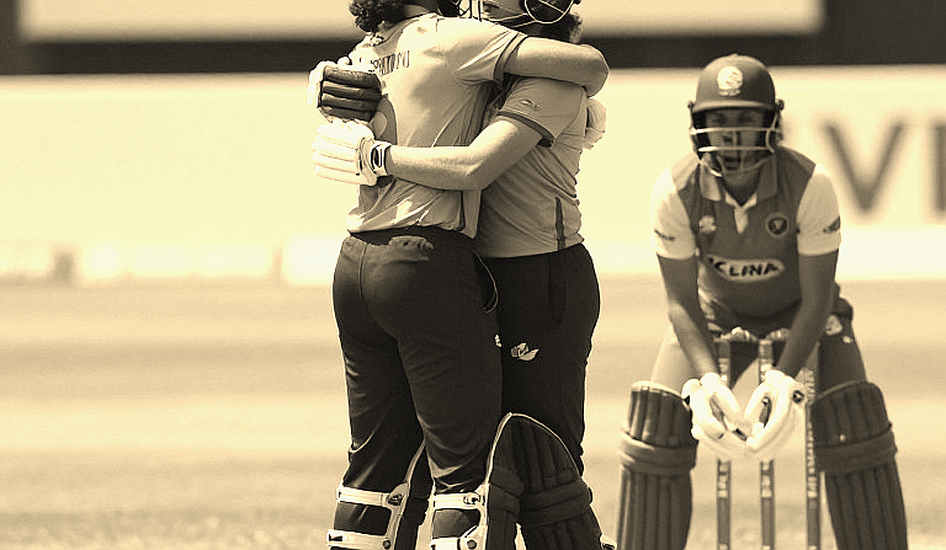
Now the T20I side. Jangoo's international T20I record: 7 matches, 163 runs, a strike rate of 120.74. In modern T20I cricket, the normal benchmark for a top-order or middle-order batter is 130 to 145, and above 150 for finishers. For a wicket-keeper batter, 120.74 sits below benchmark — and that is the central contradiction of this story.
The man the headline introduced as a "stunning ODI form" story has an entirely different T20I identity. ODI Jangoo and T20I Jangoo are not the same cricketer — at least not in the language of numbers.
Honesty requires one addition here, or the analysis stays incomplete. Seven matches is a small sample. In 163 runs, the error bars around a strike rate are wide; one hot series could lift that number quickly. So 120.74 is not a verdict, it is a caution. But a caution and a success story are not the same thing, and the job of journalism is to keep that difference visible.
The age arithmetic matters too. Jangoo is 29, with a December 2026 international debut. This is not a young-prospect story; it is the story of a late-blooming, experienced domestic performer. A batting peak usually runs from 27 to 33 — he is in it now, but there is no long development runway. The benefit is short-term reliability; the cost is limited future investment. The "rising star" framing does not quite fit.
The picture the headline leaves out
Now to the place where the story flips.
Everyone is talking about Jangoo's bat. But this call-up is really a story about gloves. West Indies had to summon a keeper as cover mid-tour — that is the actual news, because strong sides usually carry redundant keeper coverage. One keeper's injury destabilising a whole series is a structural signal, not merely a personal one.
Second, Andrew has not been ruled out. No fracture was found, but he is under observation. That means Jangoo starts on the bench. If Andrew recovers, Jangoo's role may be minimal; if Andrew breaks down mid-series, Jangoo abruptly becomes first choice. One call-up, two entirely different futures.
Third, the tour is on Indian soil, across five different venues. A five-match bilateral series tests not just the first XI but squad depth. That is the logic of a cover call-up — having a fallback if someone breaks. That is selection intelligence. But presenting it as a "reward for form" is a different claim.
One more thing is worth noticing. The adjectives in the headline — stunning, sparkling, spectacular — all describe ODI runs. The T20I number (120.74) appears nowhere. A familiar journalistic move is to keep the favourable format's numbers in front and quietly push the unfavourable format's numbers to the back. This may not be deliberate analysis, only a natural engagement decision. But the effect is the same — the reader concludes a T20I-ready batter has arrived.
From years of watching matches from the boundary edge, I recognise a pattern: when one format's runs are sold as assurance for another, a gap opens between expectation and reality, and disappointment fills it. Working around the transfer market taught me that rumour and information are separated only by verifying the source. Cricket is the same — a headline's adjectives must be verified by that format's numbers.
Someone may say I am being too sceptical. Perhaps. But keep one thing in mind: the record chase at New Chandigarh owed as much to the pitch and conditions as to the batters. And a five-match T20I series on Indian soil is one of the hardest away assignments in the format. Against that backdrop, "the form will translate" is a bold assumption, not a proven one.
Before the last over
Jangoo's call-up is no injustice. 239 runs demand respect, and for a 29-year-old keeper-batter who bloomed late, the opportunity is deserved. But deserving and being ready are not the same thing.
The real question is about format — will Jangoo be judged by T20I standards, or by the glow of his ODI runs? If he plays, his first ten or twelve balls will begin to answer that. And by then, no one will remember what the headline said.
When the stadiums emptied, my notebook learned to listen louder. The ending of this story is written on Jewel Andrew's finger, not on Jangoo's bat.