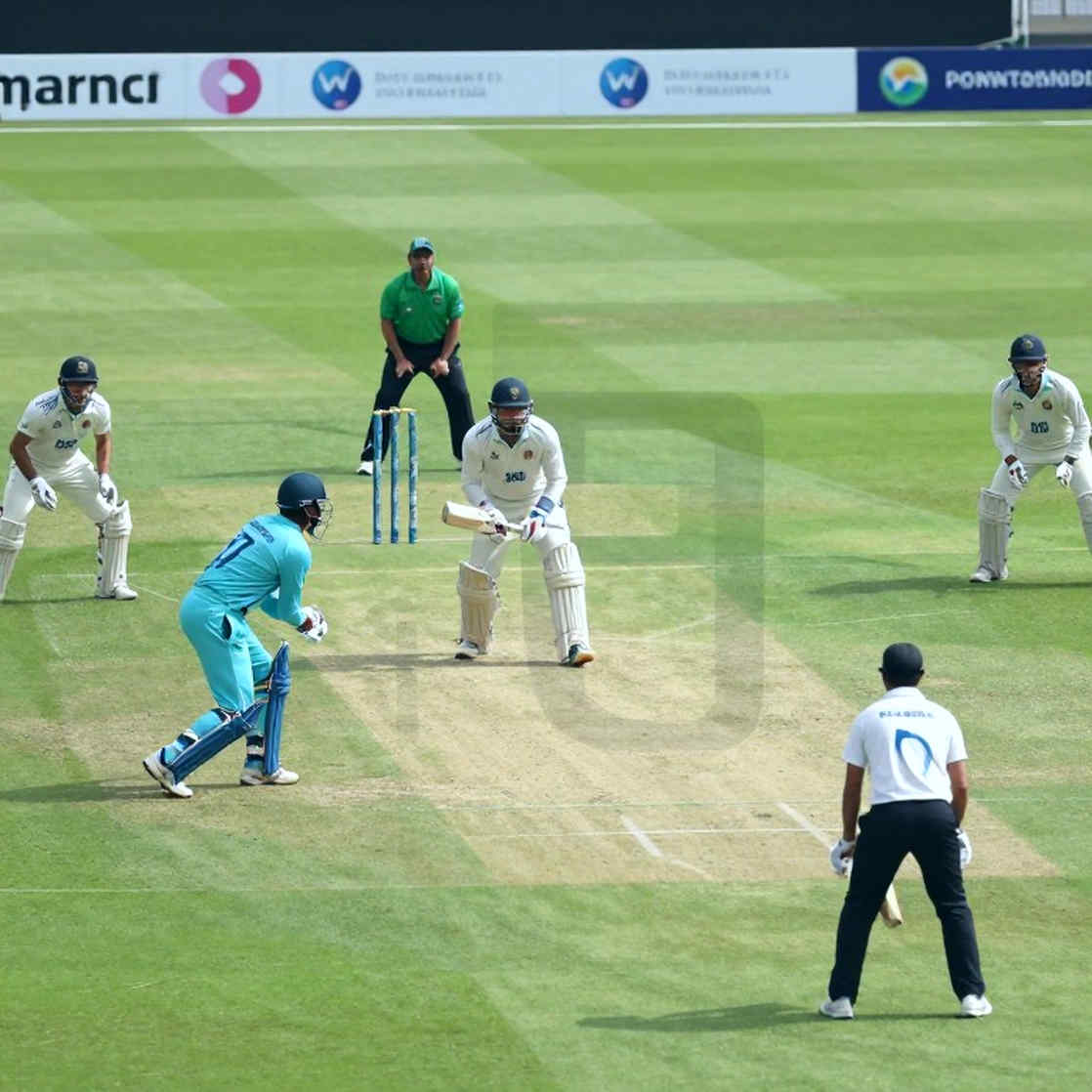
A 53-Place Leap, No. 94, and a Big Story Built on a Small Sample: Reading Vaishnavi Sharma's Rise With Caution
**প্রশ্ন: বাইশ্নবী শর্মা কে?** উত্তর: বাইশ্নবী শর্মা ভারতীয় মহিলা ক্রিকেট দলের একজন স্পিন বোলার, যাঁর বয়স ২০ বছর। **প্রশ্ন: তিনি কী কৃতিত্ব অর্জন করেছেন?** উত্তর: জিম্বাবুয়ের বিরুদ্ধে আইসিসি উইমেনস চ্যাম্পিয়নশিপ ওয়ানডে সিরিজে দ্বিতীয় ম্যাচে চার উইকেট এবং তৃতীয় ম্যাচে ৫/৩৯ নিয়ে ম্যাচসেরা হয়েছেন; ওয়ানডে Bowling র্যাঙ্কিংয়ে ৫৩ ধাপ এগিয়ে ৯৪ নম্বরে পৌঁছেছেন, যা ওই আপডেটে সবচেয়ে বড় উন্নতি। **প্রশ্ন: সিরিজের ফলাফল কী ছিল?** উত্তর: ভারত মহিলা দল তিন ম্যাচের ওয়ানডে সিরিজ ৩-০ ব্যবধানে জিতে ক্লিন সুইপ করেছে; এটি আইসিসি উইমেনস চ্যাম্পিয়নশিপের অংশ ছিল, যার ফল বিশ্বকাপ বাছাইয়ে যুক্ত হয়। **প্রশ্ন: তাঁর ওয়ানডে অভিজ্ঞতা কত?** উত্তর: এই সিরিজটি ছিল তাঁর ওয়ানডে ক্যারিয়ারের মাত্র তৃতীয় ম্যাচ, অর্থাৎ নমুনা অত্যন্ত ছোট। **প্রশ্ন: ৫৩ ধাপের লাফ কীভাবে ব্যাখ্যা করা উচিত?** উত্তর: আইসিসি র্যাঙ্কিং ওয়েটেড রোলিং পদ্ধতিতে চলে; কম ম্যাচ খেলা খেলোয়াড়ের সাম্প্রতিক ভালো পারফরম্যান্স বড় লাফ তৈরি করতে পারে। ৫৩ ধাপের লাফ নাটকীয়, কিন্তু পরম Position ৯৪ নম্বর— এখনো মধ্য-নিম্ন স্তর। **প্রশ্ন: কী কী তথ্য অনুপস্থিত?** উত্তর: ভেন্যু, পিচের ধরন, বোল করা ওভার সংখ্যা, Economy রেট এবং দলীয় র্যাঙ্কিং উৎসে উল্লিখিত নেই; ফলে তিনি স্ট্রাইক বোলার না কন্টেইনমেন্ট বোলার তা নির্ধারণ করা যায় না। **প্রশ্ন: সবচেয়ে সঠিক মূল্যায়ন কী?** উত্তর: ছোট নমুনা ও তুলনামূলক দুর্বল প্রতিপক্ষের কারণে সঠিক মূল্যায়ন হলো — প্রতিশ্রুতিশীল তরুণ স্পিনার যিনি সত্যিকারের সুযোগ পেয়ে কাজে লাগিয়েছেন; শীর্ষস্তরের প্রতিপক্ষের বিপক্ষে পারফরম্যান্সই তাঁর দক্ষতার প্রকৃত প্রমাণ দেবে। **প্রশ্ন: সামনে কী নজরে রাখা উচিত?** উত্তর: শীর্ষ ছয় Batting লাইন-আপের বিপক্ষে পারফরম্যান্স, ওভার ও Economy তথ্য, নির্বাচনের ধারাবাহিকতা, র্যাঙ্কিংয়ের গতিপথ এবং ফিটনেস-ওয়ার্কলোড ব্যবস্থাপনা।
Introduction: One Rankings Update, Three Matches, One Question
ICC rankings updates are usually treated as low-stakes newsroom material. There is no controversy, no sudden event, only a refreshed table of numbers. That is precisely what makes them dangerous to analyse. Numbers become headlines easily, and headlines easily outgrow the truth.
India Women completed a 3-0 clean sweep of Zimbabwe in a three-match ODI leg of the ICC Women's Championship. The series result triggered movement in the latest rankings update, and the most discussed item was a 53-place rise for 20-year-old spinner Vaishnavi Sharma, who moved to 94th in the ODI bowling rankings — the biggest jump in that update.
The central question is not simple. What does a 53-place leap actually say? Is it the birth announcement of a new star, or the ordinary arithmetic of a ranking system being read with too much emotion?
The answer is two-sided. The on-field returns are genuinely encouraging, but the evidential base is thin. The correct framing is a promising young spinner who has earned a real opportunity — not an established star.
Series Context: More Than a Bilateral
This was not a routine friendly series. It was part of the ICC Women's Championship, whose results feed directly into Women's ODI World Cup qualification. The clean sweep therefore carries qualification value, not merely form value.
The article itself reports no team-ranking movement, so no conclusion about India's team standing is supportable. This is an individual rankings update, not a team assessment.
The outcome is consistent with the tier gap between the sides. India are an upper-tier women's side; Zimbabwe sit lower. The sweep is a maintenance result plus a development opportunity — not evidence that India's competitive ceiling against peer nations has shifted.
Vaishnavi Sharma: What Is Known, What Is Not
According to the source: a 20-year-old spin bowler, four wickets in the second ODI, five wickets for 39 runs in the third, a Player of the Match award, and only her third appearance in the ODI format.
Equally important is what is absent. No venue, no pitch type, no overs bowled, no economy rate, no bowling average, no strike rate. A complete bowling profile cannot be constructed. These gaps should be marked as unknown rather than estimated.
The Five-Wicket Haul: What the Numbers Say
A five-wicket haul is always a significant achievement. For a spinner, taking wickets in the middle overs is a scarce skill — batters are set, fields are spread, and the bowler must create something.
But context matters. Wickets against a lower-ranked side are systematically easier than against top-order Test-nation batting. The rankings system adjusts partially, not fully. The 5/39 should be discounted before any world-class framing.
Still, a four-wicket haul followed by a five-wicket haul indicates wicket-taking penetration rather than mere containment. That is the most valuable trait a spinner can show, and within the small sample the signal is clearly positive.
Ranking Mechanics: Why 53 Places Looks So Large
This is the analytical hinge. ICC rankings use a weighted rolling system in which recent performances and match volume both carry weight. A player with few matches and strong recent returns can move disproportionately.
A rise from roughly 147th to 94th reflects a small absolute points gain amplified by a thin match base. That is a feature of the system, not a flaw — but the honest sentence is: 94th, the biggest jump in the update, but still a mid-to-lower-tier absolute standing.
Without that distinction, readers will assume a top-20 arrival. The reality is different.
The Small-Sample Trap
Third ODI appearance. That single phrase contains the limit of the entire analysis. Three matches means effectively two notable bowling returns. Calling that an emerging frontline spinner is classic small-sample overreach.
The honest sentence is: a promising early signal, unproven against elite opposition. That sentence holds both hope and boundary.
Opposition Quality: The Zimbabwe Factor
Results and ranking points from this series are real, but their sporting read-across is limited. Replication against peer opposition is what would convert this into demonstrated skill.
This is not criticism, only accuracy. The tier gap is not usually mentioned in ranking headlines; readers see the number, not the context. Filling that gap is the analyst's job.
Also notable: no Zimbabwe player is mentioned anywhere in the source. The story is framed entirely from India's perspective — a media-framing signal, not a data point.
Strike Bowler or Containment Bowler: A Missing Metric
The biggest data gap is the economy rate. Runs are given, overs are not. Economy cannot be computed.
Why it matters: ODI bowling balance depends on two types of bowler — the wicket-taker and the run-stopper. A spinner who does both is a rare asset, but wicket counts alone cannot classify the profile. Until full scorecards are available, this classification remains impossible.
The Age Curve: Economics of a 20-Year-Old Spinner
Spinners mature later and last longer than pace bowlers. A 20-year-old spinner with wicket-taking returns is a high-option-value asset for the next eight to twelve years if the trajectory holds.
This is the most encouraging element of the story. But potential is not achievement; converting it requires sustained returns over time and against varied opposition.
Team Picture: Spin Depth and Planning
The real team-level signal is the talent pipeline. Blooding a 20-year-old spinner who immediately takes wickets indicates India Women are actively widening their spin options ahead of global tournaments.
But one player's success does not validate an entire system. This is a signal, not proof. Batting depth, bench strength and bowling balance are all unreported.
Qualification Value
Because this was a Championship fixture, the sweep's real worth exceeds rankings cosmetics: results feed World Cup qualification. Each win is a fragment of future certainty. This is inference rather than stated fact and is flagged accordingly.
Commercial and Franchise Context
This is international women's ODI cricket. No league, auction, broadcast rights or commercial contract appears in the source. Commercial analysis is therefore structurally limited.
One directional inference: a rising young player's rankings jump and Player of the Match award may support brand value in a growing women's cricket market — but this is off-source and cannot be quantified.
Risk Matrix
Small-sample overhype — Medium. Opposition-quality confound — Medium. Ranking-mechanics misreading — Medium. Missing economy data — Low. Expectation-pressure on a young player — Low to Medium.
Overall risk: Low to Medium. There are no integrity, governance, financial or geopolitical risks in the source. The risk is interpretive.
Media Narrative and the Expectation Gap
The phrase biggest jump is true, but it is a hype amplifier. Rankings updates are low-cost, high-frequency content, and superlatives are structurally favoured in headlines regardless of absolute magnitude.
So a gap forms: the narrative says rapid ascent; the reality says mid-table standing, thin sample, modest opposition. The gap is not large but it is clear.
The most defensible framing: a promising young spinner who has earned a genuine opportunity.
Industry Transmission
The industry impact of this specific article is small but directionally positive for women's cricket visibility. The strongest channel is the talent-supply signal — a domestic-to-international pathway that visibly works.
No broadcaster, betting, capital or commercial transmission is implicated.
Signals to Track
Performance against top-six batting line-ups. Overs bowled and economy rate. Selection consistency. Ranking trajectory beyond the low-base effect. Injury and workload status.
Conclusion
India Women swept Zimbabwe 3-0, and 20-year-old spinner Vaishnavi Sharma's four-wicket and five-wicket returns lifted her 53 places to 94th in the ODI bowling rankings. All of that is true, meaningful and encouraging.
Three caveats must travel with it: the sample is tiny, the opposition is lower-tier, and the absolute ranking is still mid-table. Strip those away and analysis becomes praise — and praise that later proves wrong becomes the analyst's liability.
The two most material values sit outside the headline: qualification points from a Championship clean sweep, and a credible signal of deepening spin depth.
And the most accurate sentence is probably this: a young spinner was given an opportunity and took it; what remains to be seen is whether she can convert opportunity into durable skill.
Methodological Note
This report is based on an analysis of a rankings brief. Venue, pitch type, overs bowled, economy rate and team ranking were not stated in the source and have been marked unknown rather than estimated. This is sports information only and does not constitute betting advice.